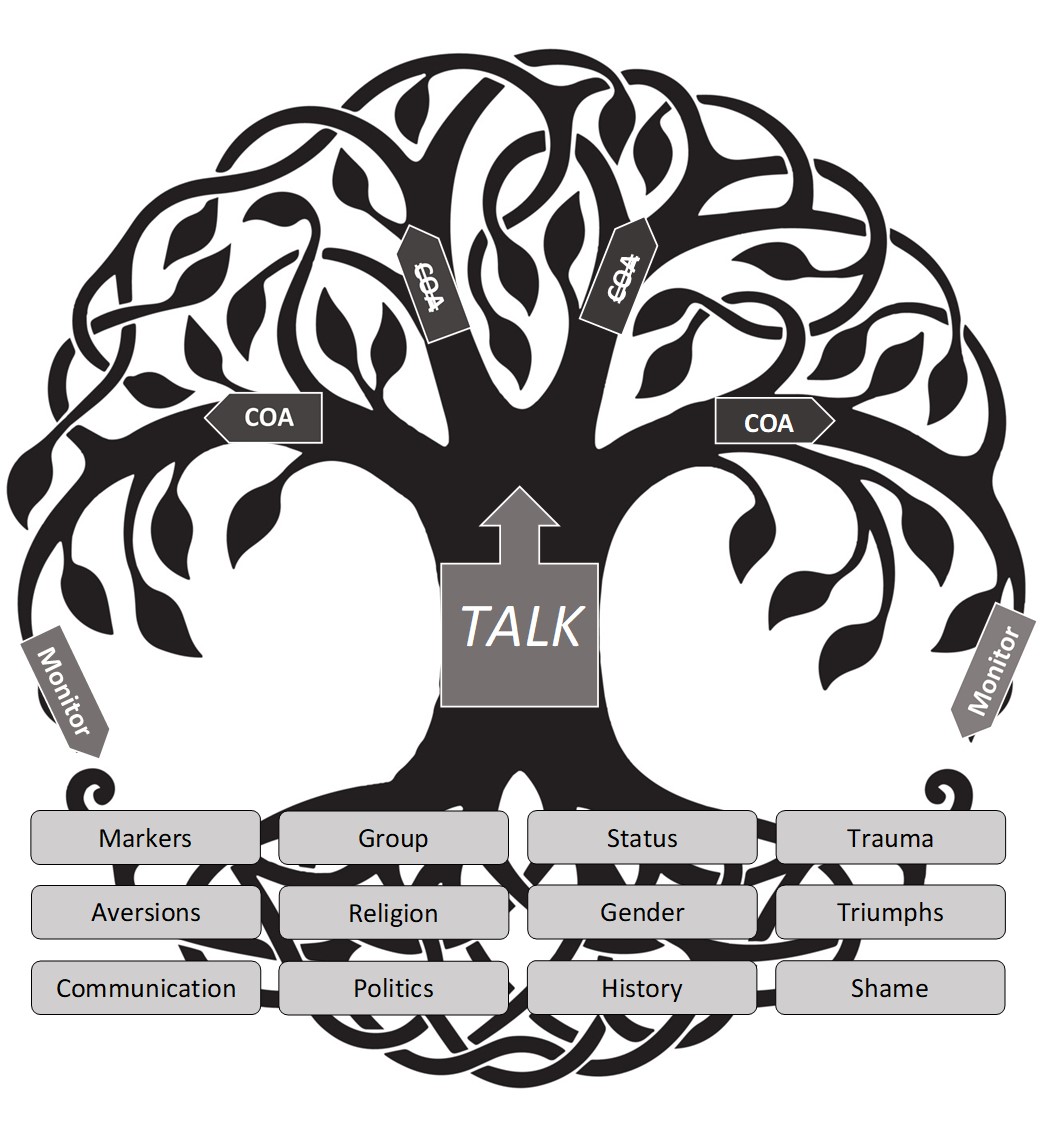
Aversions – what we are not
Cultures often define themselves against what they are not. In order to understand ourselves, we need the Other to compare ourselves to. It gets most potent and charged when the comparison is unfavourable: the Other is inferior, even despicable, bolstering a sense of shared identity in being superior. One way that this can be utilised in influencing is to speak to and align with a group’s rejections when components of these rejections align with what we want them to do.
The ancient Greeks often defined themselves in contrast to non-Greek peoples, whom they called barbaroi, the barbarians. This term originally meant “those who do not speak Greek” but came to encompass all non-Greek cultures. The Greeks saw themselves as civilized, rational, and democratic in contrast to the supposedly uncivilized, irrational and despotic “barbarians”. This rejection of the barbaroi helped shape Greek identity and their sense of cultural superiority. Playing to this aversion by adopting Greek culture, language, and customs was the most direct way to gain acceptance. This process, known as Hellenisation, was widespread in the ancient world.
Another ancient example of aggressive deployment of xenophobia (rejection of the other) was when Octavian used Mark Antony’s affair with Cleopatra to undermine his reputation in Rome. Octavian painted Antony as going native and abandoning Roman values. Good Romans were loyal, frugal, strong-willed and dignified. Antony was under Cleopatra’s spell, implying that he was disloyal, easily swayed by foreign luxuries, weak-willed enough to be manipulated by a foreign woman, and lacking the seriousness befitting a Roman leader. Romans looked down upon non-Romans, and Antony was painted as non-Roman. Octavian’s influence campaign turned public opinion against Antony, culminating in the battle of Actium. Octavian became the great emperor Augustus; Antony and Cleopatra committed suicide.
Rejecting the Other, wanting to keep to ourselves, is not confined to the ancients. It is right here in the West too, whether expressed by right-wing protesters wanting to keep Albanians out of Britain, or left-wing protesters wanting to keep the British out of Australia.
Religious groups define themselves by difference as much as any other tribe or nation. Some Shia theological texts question the legitimacy of the first three caliphs—Abu Bakr, Umar, and Uthman—who are highly respected in Sunni Islam. These critiques can be dismissive of Sunni beliefs regarding the rightful successors to Muhammad. In some Shia circles, derogatory terms like Nāsibī, which historically referred to the enemies of Muhammad, can be used to refer to prominent Sunni figures or the Sunni community at large. Iranian state media outlets have been accused of portraying Sunni groups predominantly in the context of extremism or terrorism.
Meanwhile, some Sunni theological texts label Shia practices and beliefs as bid’ah (innovations) or even heretical, questioning the legitimacy of Shia Islam. Some Sunni groups have at times declared Shias as kafir, or non-Muslims. Media outlets in Sunni-majority countries such as Saudi Arabia and Pakistan often depict Shia communities as influenced or directed by Iran, especially when there is Shia unrest, suggesting that they might prioritise Iranian interests over national loyalty.
When we study how cultures view themselves against the other, we need to be able to handle the existence of stereotypes. They are part of human cognition, providing shortcuts based, correctly or incorrectly, on patterns we perceive. As a WEIRD culture, we may see the harm that stereotypes can create and feel that we need to avoid even acknowledging them in case that harm might spread. But wishing them away doesn’t stop others from using them.