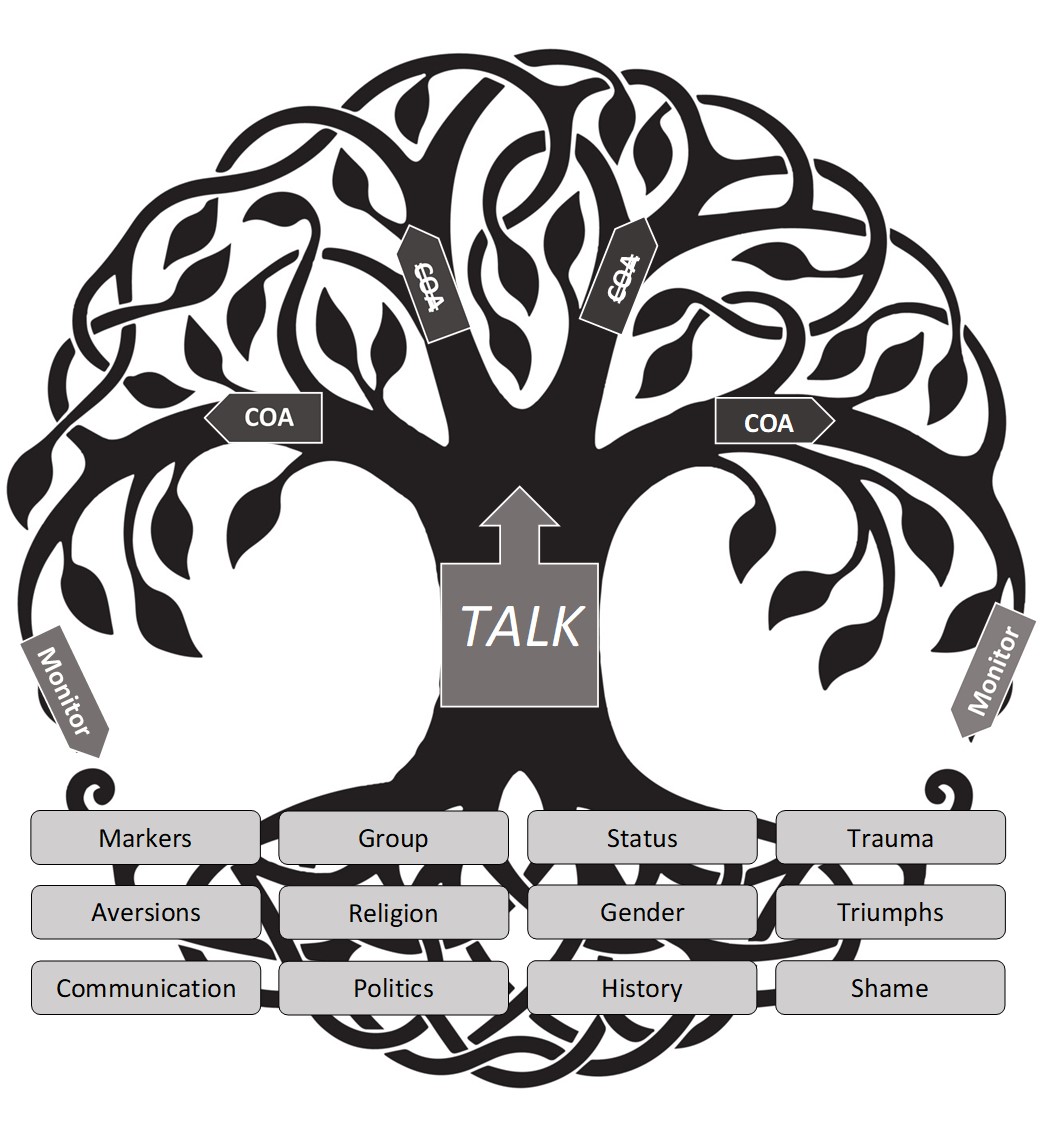
Group dynamics and characteristics
A group’s success or failure is primarily influenced not by ideology but by what CREST’s Paul Taylor calls “sabotage” – destructive actions, inaction, or wasted effort. Group disruption often works better when it focuses on relationship frictions within the group rather than practical conflicts around tasks. Arguing about the best way to carry out some messaging or build a bomb might easily result in better messages and bombs. Start resenting the person asking you to do it, because you feel slighted and excluded, and there might be more harm to the overall project.
Once a group is formed, it settles into a stable equilibrium where everyone has their role and things are working in a predictable way. This can be hard to change. Small, tight-knit groups typically form stronger bonds than large ones, with a strong in-group identity. Groups also struggle when they reach a certain number – Dunbar’s number, the idea that humans aren’t wired to cope with more than around 150 social relationships, argues that we lose trust and social benefits when groups get too big. A way to leverage this dynamic is to merge two groups together, forcing new, tricky social dynamics. Activist movements often collapse when ideological commitments force them to merge with other networks, such as with intersectional feminism’s demands that women can’t just fight for their own class interests, but the interests of all other oppressed groups at the same time. Less is often more: hitting a group hard might forge even stronger connections and motivation, while a series of subtle nudges that can sow low-level interpersonal dissatisfaction can weaken it. These nudges don’t just have to be interpersonal – the fear of failure, that the goals might not be attainable or that proposed plans didn’t work elsewhere, is a powerful demotivator.
The book goes into some detail on inventories that rate groups based on characteristic – do look into Hofstede, World Values Survey and GLOBE for more information. In summary, cultures vary in quite spectacular ways in the degree to which they see themselves as individuals or components of a group, their attitudes to risk and pleasure, and the way they want to be hierarchically governed. Never allow your WEIRD Western bias to make you believe that everyone is like you.