Status
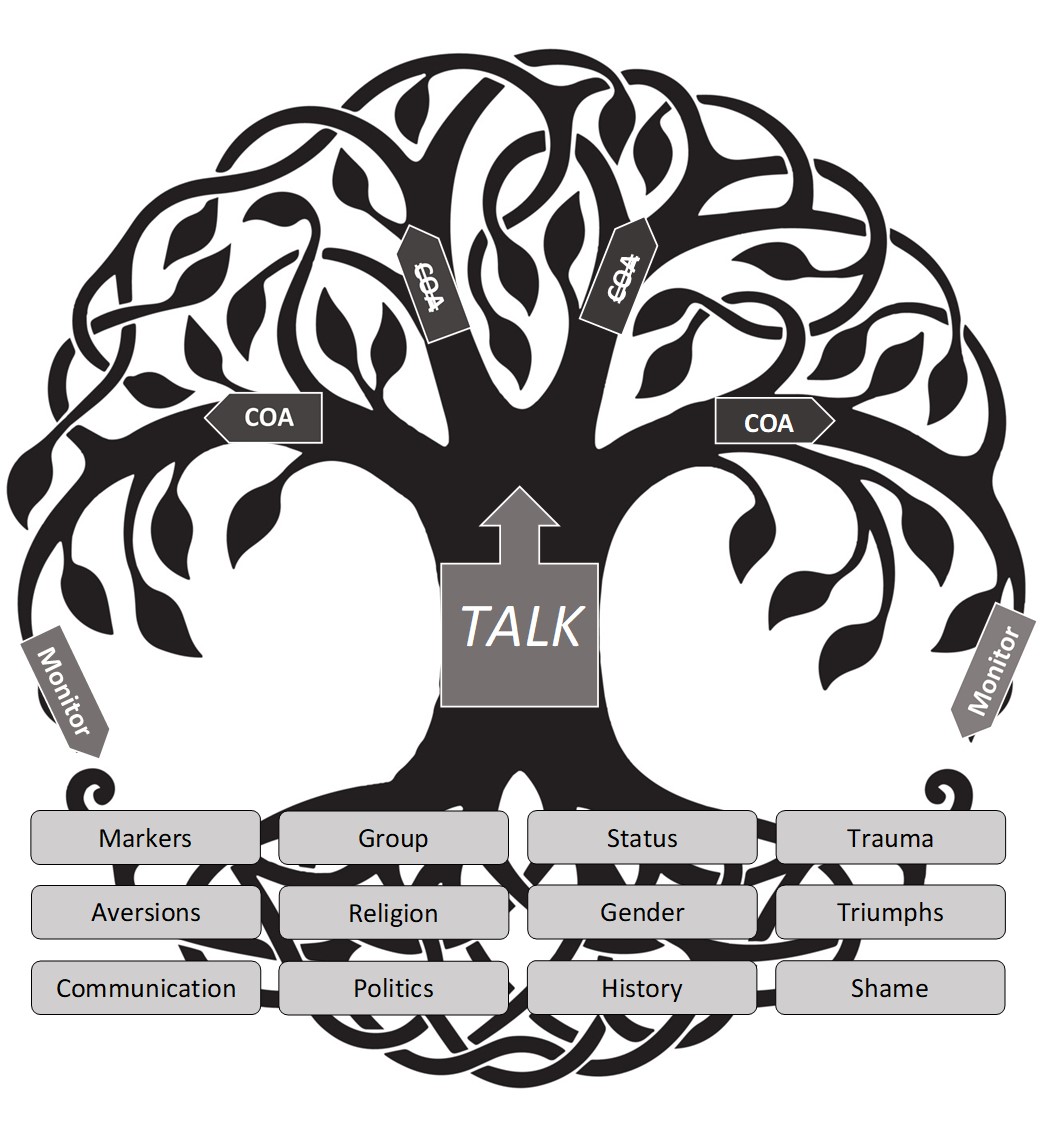
Status, where we are in the hierarchy, is one of the most useful territories to look for levers. It is universal, core to our evolutionary past, and a breeding ground for resentment.
All existing large cultures are hierarchal in some way. The hierarchy may be overt like the rank system in the military, or much more subtle like the status differences in a friendship group. The hierarchies are also multilayered – I may have a higher status than you at work due to my rank of Captain, but when we go out with the team and you are more socially skilled than I am, you have the status advantage in the pub.
Will Storr speaks of three distinct versions of status games: dominance, competence and virtue, where humans are unique in how much we favour competence and virtue in comparison with even our closest relatives. In our everyday life, we only display 1% of the physical aggression (dominance) that chimpanzees do. Instead, our very social species have focused on being competent and virtuous. To be competent is to be good at what you do, to build good houses or cars, to make excellent websites on cognitive warfare, to be healthy and attractive. It is hard work and difficult to fake. Poor houses leak, and rubbish websites don’t get any visits, and we are very skilled at noticing when others’ reduction in attractiveness betrays poor health hence lower competence. What if there was something easier to do in order to secure status in the group? There isn’t for chimpanzees, but there is for you – the virtue game.
As a result of our extreme group mentality, coupled with our abilities in abstract thinking, humans have evolved a strange affiliation with something that we call virtue. Very loosely connected to ideas of fairness evident in other mammals, where bats and wolves ensure reciprocity when allocating food in the group, much of our lives revolve around signalling the right virtues in the group. These virtues are group specific and diverge radically between groups.
To be a virtuous soldier in the Russian Army is to be what we would describe as a monster. You will physically and sexually assault those inferior to you in your barracks, since not doing so will single you out as a weakling – slonyata – and hence making you the target for the assaults. Having duly signalled your virtue in this status game called dedovshchina, you join the ranks of the dedy, but watch your back and keep up the penalism because the game never ends. By contrast, to be virtuous in the Royal Marines Commandos is to be a solid “oppo”. You look after your mate as well as focus on the objective. If your fellow Commando drops down due to not having drunk enough water, it is you that gets a bollocking by your Sergeant for not having taken care of him. To be selfish, to not pull one’s weight, is to be “jack”. The Royal Marine Commandos revolve around good oppos and quickly get rid of those who are jack, an effective status game that has produced some of the finest fighting units in the world. Notice how there is an element of competence to both of these virtue games – you need to be strong and effective to be able to abuse or look after your fellow soldier. The virtue part is making the choice to abuse or look after, but it is a choice only open to those strong enough to do so.
There are virtue games entirely devoid of competence, and they are the ones most vulnerable to influencing. The link between what we do and what the effect is has gradually been severed in parts of our culture. The connection between finding food and eating it, building a tool and then profiting from using it, has been overtaken by cultural overlays of abstract functions. We now have spaces in our society where we can be virtuous without doing anything. One could perhaps even claim that the developing of this model is such an endeavour, at least if the development only gives me acclaim and status, but the model never gets actively used and has a concrete effect in the world. We see the emergence of these competence-free status games in the rise of Christian virtues two thousand years ago. Up until then, might made right, so dominance and competence was what determined whether something was good (hence conveyed status) or not. The ideas that rich people would struggle to get to heaven, or that the meek shall inherit the Earth, were the first competence-free virtues and fully switched the competence game on its head. It was not the best that were the best. Given the West’s roots in Christian culture, whether transformed into secular humanism or not, these ideas persist in the West today.
Christianity decoupled virtue from competence, but we still had traditional authority. In the West fifty years ago, and currently in most of the rest of the world, some voices carried much more weight than others. The village elder, the parents or the teacher were all seen as being wiser and having higher status than the commoner, the child or the student. Universal suffrage, equality and freedom of speech have democratised voices in the West, where the strength of our voices are more equal than before. Greta Thunberg’s voice stops icebergs from moving, anyone with an internet connection can create social media storms, and children have a say in what is happening to them. While there are benefits to these developments, it would be naive to ignore the extreme vulnerability to adversarial messaging that it creates. If all opinions are valid, the destructive ones are as well.
We have arrived at a situation where some Western virtue status games do not need any competence to play, nor are they restricted by authority. They are played according to the values of a group, so setting these values determines the actions of the players. If a core value in my specific subgroup is the racial purity of white England, then I will receive virtuous status points for being opposed to multiculturalism and immigration, even if I don’t actually do anything about it. My voicing of the ‘good’ viewpoint is sufficient. If we replace racial purity with net-zero, gender-critical beliefs, traditional values or trans rights, we get different games where specific viewpoints need to be expressed by the players in order to get status in the group. While it may not always be easy to change the values of a group, an influence analyst is at least not hampered by having to wait for new competencies to be developed by the target audience in order for their trajectory to change. If you wanted to convert me from a carpenter to a chef, you would have to spend years retraining me, but if you wanted to convert me from a US patriot to a supporter of Russian traditions, all you need to do is effectively play on my traditional values and homophobia.
When you collect information on a subculture that you wish to have an impact on, consider what it looks like to be a winner in that subgroup. Remember that one doesn’t have to be that winner in order to have the values – this is what many aspire to, even if few actually get there. I may not have Ryan Reynold’s physique or gift of the gab, but it doesn’t stop me from wishing that I had it. In Moscow, to be a winner may be to have an effortless entry into the nightclub, wearing a sharply pressed tracksuit and with an enhanced blonde by your side. In Bristol, the winner wears barefoot shoes, a hipster beard and a t-shirt displaying an indie band that no one has ever heard of as they get preferential entry into the communal pottery-making yurt. There are values that underpin these two caricatures, values of wealth, sexual prowess, egalitarianism and connection to nature. Some of these values may be adjacent to values that would drive the actions that you wish to create.
In addition to our discussions about how it feels good to have status, we should also touch on how bad it feels not to have it, and how this can be weaponised. When my or my group’s efforts to achieve status are thwarted, perhaps because of us not keeping up with the latest cultural changes, we may look at the winning groups with resentment. Why are the Asians doing so well in the US educational system? Why won’t women date me, why do they look down upon me? Why do the Singhalese or the Tutsi have all the power? Simplistic answers to these questions abound, and most of them are full of resentment. A skilled influence analyst chooses the simplistic answer that resonates with her objectives – the Singhalese have the power because the British skewed Sri Lankan power relations by favouring them, or women don’t like me because they have been brainwashed by feminism.
The weaponisation of resentment is to turn everyday human sadness into a churning pit of anger aimed at a target. The difference between pain and resentment is what makes it so powerful. If you step on my foot, I will feel temporary pain. This pain pales in comparison with the resentment I will feel against you. How dare you step on my foot? Furthermore, how dare you as a member of your despicable group step on my precious and important foot? What has the world come to? It is unfair, typical of the terrible abuses we have come to expect, and indicative of all that is wrong. Resentment is ruminative: the initial wound festers as our thoughts spiral into a positive feedback loop of mental pain and anger.
As we have seen, current and historical Russian operations are underpinned by Russia’s keen understanding of Western status games. Online culture wars, though largely originating in our own cultures, are also stoked by Russian and Chinese efforts to see which polarised group can shout loudest against another polarised group. We can defend against these amplifications by fostering a culture that re-introduces competence into activism. What if it wasn’t enough to virtuously blog for clean rivers, what if the accepted societal trope was that one would have to go to the river and try to clean it up in order to be respected and gain status? This connects to Taleb’s ideas about skin in the game, where the only trusted individuals should be those that actually have a concrete stake and effort in the area. Such attempts to temper the wildly escalating positive feedback loops of social media storms are useful, but we can also focus on the original values that fuel the storm. These efforts are part of the long and arduous task of making Western culture anti-fragile whilst still preserving its openness and diversity.