Triumphs
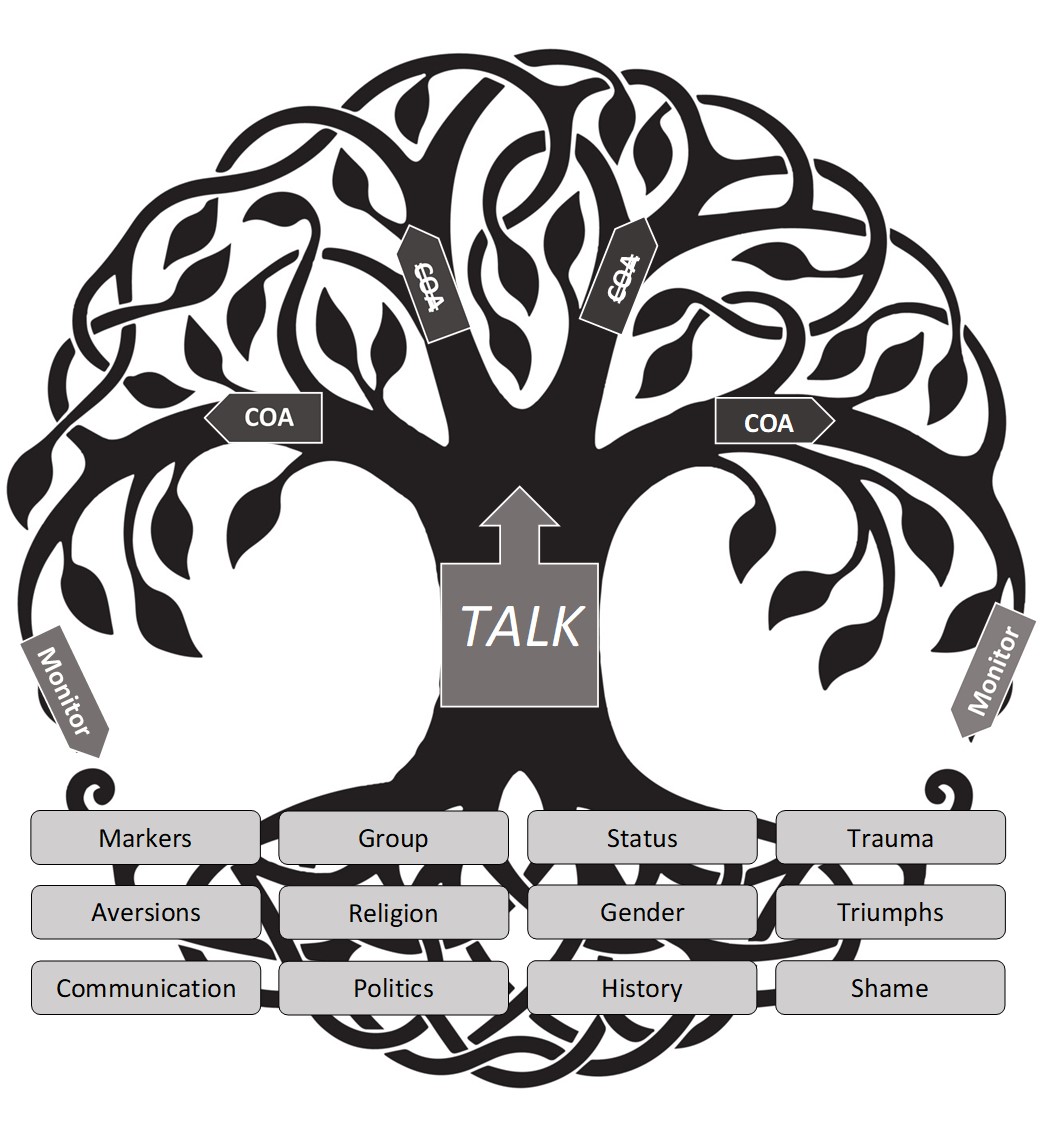
If a culture’s experience of trauma shapes its negative affect about itself, its enemies and its neighbours, its past triumphs are equally powerful levers in driving positive stories of strength and pride. These positive stories aren’t always harnessed for positive ends – they can be drummed up to intimidate, dominate and start wars – but they operate in their own distinctive psychological space. Triumphs tell us of who we have been, and therefore who we could be.
Sometimes, this can offer wholesome reassurance that we’re strong and doing just fine. Triumphs can be positive levers that take groups away from infighting and towards a shared goal. China has drawn on tales of Han exceptionalism to create a proud and unified culture that has attained stunning economic progress and wealth within two generations. Sometimes, however, triumphs serve as a reminder that we could be so much more, and there is often an “if only” attached to this: if only we could excise weakness within our ranks, take back our rightful lands, or crush our rivals.
Triumphs are often specific military wins that get commemorated with grand monuments like the Arc de Triomphe or Trafalgar Square. They can also be more generalised stories of past or present greatness – and, as with trauma, if this looks like it is sometimes thin on external facts to an outsider, it doesn’t matter, because it’s the shared belief and experience that counts. The Nazis drew on a narrative of a glorious Aryan past that forged the great civilisations of the Indus valley, Greece and Rome. The ancient Germanic tribes that supposedly stemmed from purest Aryan blood were stronger, smarter and more advanced than any other. The Third Reich would pick up where the first Reich of the Holy Roman Empire and the Second Reich of Bismarck’s unified German empire left off. This tale of past and future triumphs drew on some facts and a lot of fiction to tell a motivating story about the need to fulfil rightful German destiny.
Outside the West and the most educated, Western-style echelons of non-Western cultures, most people still tell similar stories of past glory. The West’s self-critical norms are, in part, a reaction to the tribal triumphalism that characterised Nazi propaganda: from our viewpoint the consequences of Nazi rule made it ethically impossible for Westerners to ever think that way again. But, as ever, we are being WEIRD. There are benefits to this, but we need to detach ourselves from it in order to understand how most people have understood their culture across cultures and times. Most people are proud of their culture, and cultural stories unify them.
Triumphs need not be military: they can also be about the good times, when our culture excelled in the world. The Kievan Rus’s adoption of Orthodox Christianity under Vladimir the Great is a cultural turning point and triumph in Russian cultural mythology. The great Byzantine art, architecture and ritual that continue to characterise Russian identity started here. These stories of the good times may tell a shadow story about what has gone wrong in the here and now, and how we can look back to the past to fix it: Russia, the origin and mother of the Slavs, needs to take responsibility and save her naïve children from the threats of LGBTQ and Islam.
Triumphs can be wielded defensively, to sustain a shared cultural story in troubled times, or simply to maintain cultural norms when things are going well. It can also be wielded offensively, to rally the troops behind a cause in preparation for conflict. The Ukrainian trident, or Tryzub, is a symbol of historical resistance against invaders. Symbols of Russian victories over the Nazis in World War II – or The Great Patriotic War, like the liberation of Kiev from German occupation, can be used to justify Russian military incursions such as the purported “denazification” of Ukraine. The Ribbon of St George, a Russian military decoration, became used to show remembrance of the veterans of the WWII Eastern Front, and now signifies patriotism and supporting the Russian military cause.
One group’s triumph is another’s trauma – the founding of Israel is also the Nakba. When thinking about triumphs as levers, though, we don’t engage our usual WEIRD instinct for balance. We are only interested in how the event is viewed through the eyes of the target audience.