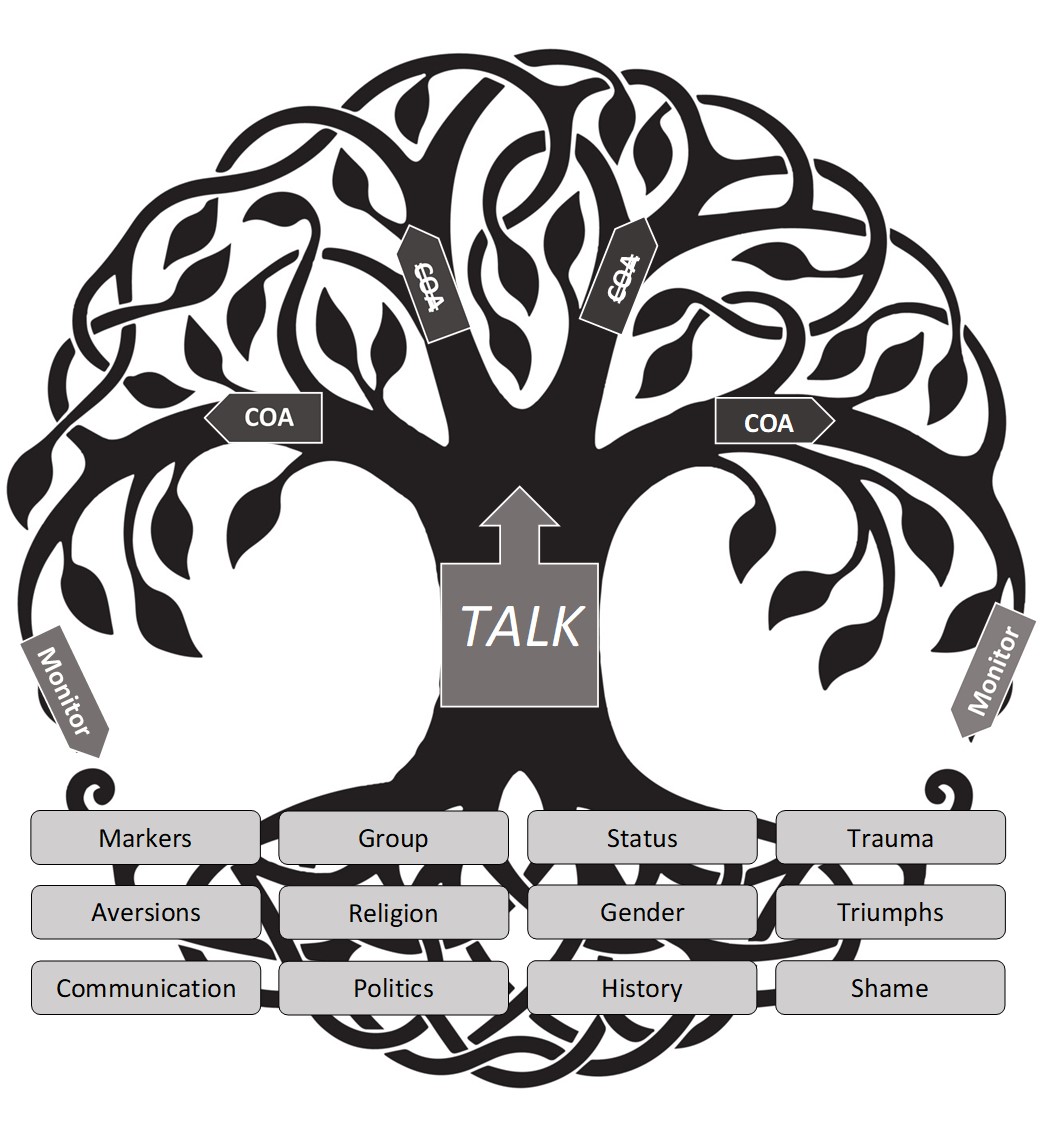
Shame
Please do not use the shame factor when influencing, but do red-team against adversaries using it. When guarding against information operations utilising this factor, we need to be on the lookout for emotive content that provokes strong feeling of guilt and shame, and alongside it content that provokes resentment from other groups. When we notice these emotions, either in ourselves or being stirred up in online and media discourse, we should detach from our WEIRD mindset and ask ourselves: to whose ends? Who are the target audiences? What emotion and which beliefs are being provoked? What are the outcomes of these emotions and beliefs? Who benefits from that? It is helpful to be at least a bit conspiratorial, and then to fact-check whether there is any merit to the conspiracy theory we’ve just generated.
The Black Lives Matter protests that began after the death of George Floyd in the US spread via social media – an incident of apparent police brutality in another country sparked a time of shame across the English-speaking world. We were engaged in a racial reckoning, and our feelings of collective guilt and shame meant that the normal principles of law and order no longer applied.
The people who attended the BLM protests and who now attend Palestine protests in Bristol were and are overwhelmingly white. They are beneficiaries of the old order. By non-WEIRD standards, this is a really strange phenomenon. When most cultures think about shame, they are embarrassed by their country’s weakness – China’s Century of Humiliation was about China being invaded and exploited by foreign powers, Russia’s selling-out under Yeltsin in the 90s was about global interests messing up Russian stability and security. When most cultures think about proud, triumphal moments, they are often exerting their interests, and sometimes over others with the use of force. Glory is when my people are doing well. We, on the other hand, derive cultural shame from memories of colonialism and ethnocentrism, or the placing of our own people first. We derive cultural shame from differences of outcomes, in which our group does better than others. We feel guilty about it and it makes us question, even hate, our culture.
This factor, therefore, is mostly about us. There are liberal pockets in other societies who engage in this form of cultural self-criticism, such as educated liberal upper-caste Indians uncomfortable with the continuing inequalities of the caste system, or liberal Iranians unhappy with their oppressive theocracy. But our shame is very Western in its character, and it is a powerful lever for our rivals to exploit. The liberal narratives we create about the immorality of colonialism, racism and other social justice issues can be used against us in other target populations too, to highlight our hypocrisy. Actors leveraging this don’t need to be whiter than white – they simply need to set us against our own standards and find us hypocritical and lacking.
Since WWII, rival powers have conducted influence operations that exploit Western guilt over colonialism and racism to fuel internal divisions, weaken the legitimacy of Western values and institutions, and counter Western influence by positioning themselves as morally superior and aligned with oppressed groups.
The impact of this on the body politic can be seen in resignation – the checking-out from society, social interest and social duties – as well as hostility to other groups or our own regimes. Cultures don’t always collapse when they’re invaded – they can also collapse due to low morale failing to sustain shared values and habits. Not all of this is due to foreign active measures – that would be its own conspiracy theory. The old adage of hard times make strong men, strong men make good times, good times make weak men, weak men make hard times is useful here. The West has been ascendant for a long time, and doing well tends to make us more relaxed and liberal which, in turn, can weaken some of the norms that make us more warlike and vigilant of outside influences. But outside influences can take advantage of the luxury beliefs that proliferate in good times, and hasten the good times’ end.